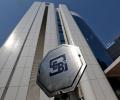
Sebi aims to stay proactive as HFT and quant firms like Citadel Securities, Optiver, Millennium, and IMC Trading are expanding rapidly in India, which is home to the world's largest derivatives market by contracts traded.

Experts say the robust filing suggests the second half of the year will see large-scale issuances, provided the markets remain supportive.

Promoters of India's top private listed companies have cut their stakes sharply since 2021, taking advantage of elevated valuations and reshaping ownership dynamics in the market. Holdings of promoters in the top 200 privately owned listed firms declined nearly 600 basis points (bps) to 37 per cent at the end of FY25, from 43 per cent in FY21.

Sebi's probe against Jane Street is part of its efforts to mitigate losses for individual derivative traders.

About 2.2 million new dematerialised (demat) accounts were opened in May, raising the total to 196.6 million as stock prices continued their upward trend.

Even as New Delhi turns up the heat on Turkish firms over Ankara's public embrace of Islamabad, Indian companies rooted in Trkiye are staying put. Mahindra & Mahindra (M&M), Dabur India, and Jubilant FoodWorks say it's business as usual, with no plans to alter course despite the geopolitical chill.

N Chandrasekaran, chairman of Tata Consumer Products, has said in the company's annual report for FY25 that India remains one of the bright spots of economic growth amid a volatile global environment. He said India's long-term growth was underpinned by strong demographic and economic fundamentals as well as structural reforms.

The interplay between domestic and foreign capital will shape India's equity markets.

Without changes to the taxation rules, buybacks are expected to remain scarce.

'We've maintained that India is a high-penetration game. It's not only a premiumisation game.'

Domestic institutional investors (DIIs), mostly mutual funds and insurance companies, overtook foreign portfolio investors (FPIs) in ownership of NSE-listed companies in the March quarter of 2025. According to Prime Database, DIIs held a 17.62 per cent stake, up from 16.89 per cent in the December 2024 quarter.

When Gensol Engineering made its public market debut through a small and medium enterprises (SME) initial public offering (IPO) in September 2019, its promoters held a commanding 96 per cent stake. Now, that figure has shrunk to a "negligible" fraction.

Indian equity benchmarks rose nearly 2 per cent on Thursday, capping a truncated trading week with their strongest weekly performance in over four years. The rally was sparked by renewed risk-on sentiment following progress in trade negotiations and expanded tariff exemptions.

Industry players said the sharp sell-off in February forced many companies to put off their listing plans

Fundraising by Indian companies through equity and debt reached an all-time high in the financial year 2024-25 (FY25), according to data collated by primedatabase.com. Fundraising through debt stood at Rs 11.1 trillion in FY25, including contributions from InvITs (infrastructure investment trusts) and REITs (real estate investment trusts).

The equity benchmark indices posted their strongest weekly gains in years, driven by bargain hunting and optimism over a reversal in foreign portfolio investor (FPI) outflows. The Sensex rose 558 points, or 0.7 per cent, on Friday to close at 76,906, while the Nifty 50 gained 160 points to end at 23,350. Over the past five sessions, both indices advanced around 4.3 per cent - marking the Sensex's best weekly performance since July 22, 2022, and the Nifty 50's strongest rally since February 5, 2021.

Since October, FPIs have offloaded Indian equities worth Rs 2.1 trillion.

Global brokerage CLSA has lowered its target price for IndusInd Bank from Rs 1,200 to Rs 900 while maintaining an outperform rating on the stock after the private lender disclosed a net worth hit of Rs 1,500 crore due to an accounting gap. The revised price target still implies an upside of 34 per cent from current levels.

618 companies were part of the billion dollar club when the markets reached all-time highs on September 26, 2024. That number has fallen to 500 following a $1 trillion wipeout in India's market capitalisation amid relentless selling by FPIs.

The changes will take effect on March 28, with portfolio adjustments expected before the market closes on March 27.
 © 2025 Rediff.com - Investor Information - Advertise with us - Disclaimer - Privacy Policy - Sitemap - Feedback - About us - Terms of use - Grievances